Category:
Dawiso Knowledge Apps

Data Organization with Code Lists

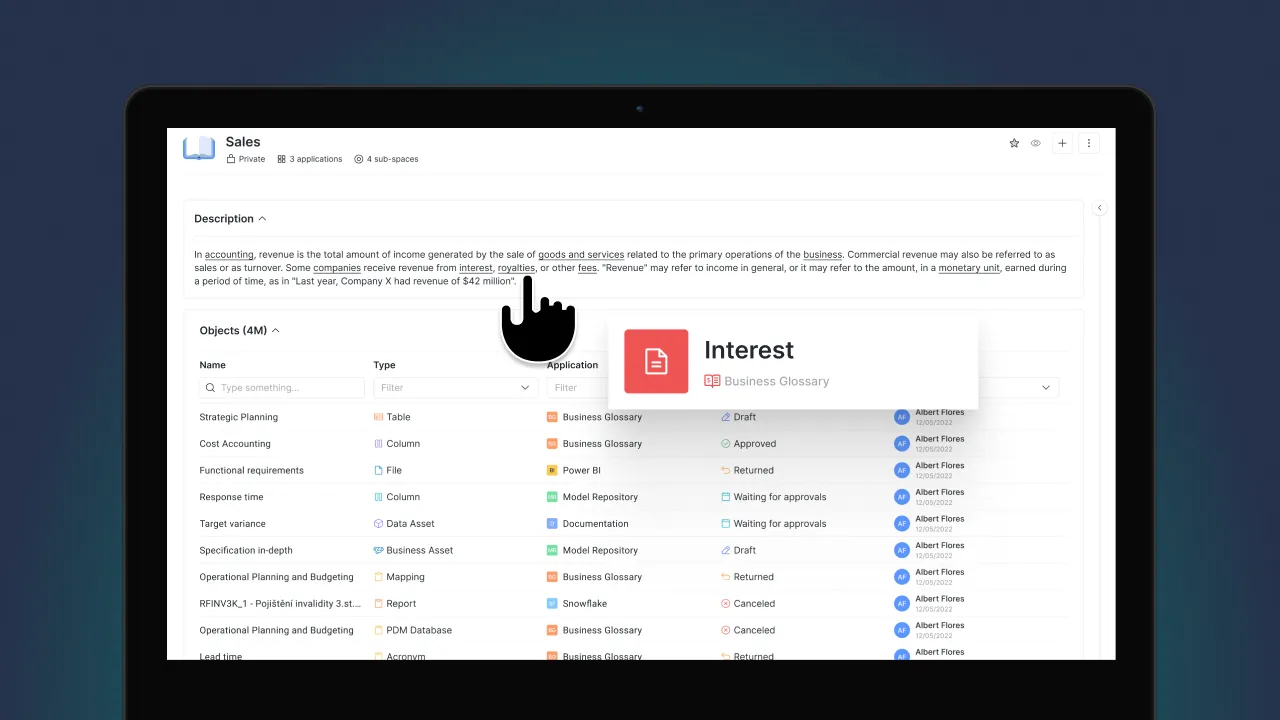
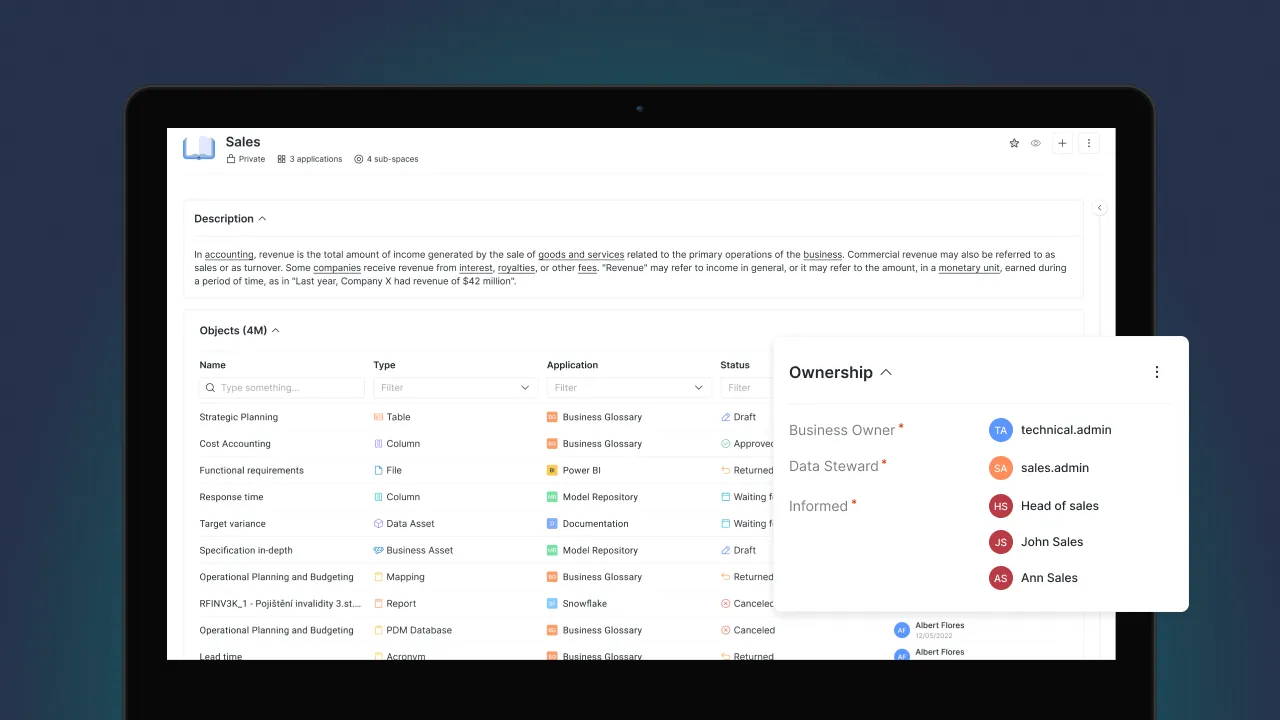
Keep your data structured and easy to manage with Dawiso's Code Lists. Classify objects by business area, sensitivity, documentation type, and more to improve clarity, compliance, and collaboration across your organization.

About this lesson

A code list is a controlled vocabulary: a fixed set of allowed values that anyone classifying an object has to pick from. It sounds like a small thing and it decides whether classification is usable. Free-text tagging produces 'PII', 'pii', 'personal data' and 'sensitive' as four unrelated labels for one concept, so no filter, report or access rule can rely on any of them. A code list makes the same idea one value, which is what turns a label into something you can govern by.

Who it is for. Data stewards and anyone responsible for making the catalog consistent enough to act on.

Points to cover

  • What Code Lists are and how they work
  • Easily assign labels to objects
  • Use labels to improve organization, compliance, and searchability

What you will be able to do

  • Explain what a code list is and when a controlled vocabulary beats free-text tagging
  • Classify objects by business area, sensitivity and documentation type
  • Use labels to filter the catalog and to evidence coverage for compliance work

Go deeper

Classification is what makes the catalog searchable by meaning rather than by name. Data Catalog
A cookie a day keeps bad UX away.

We use cookies to personalize content, ads and to analyze our traffic. We also share information about your use of our site with our advertising and analytics partners who may combine it with other information that you've provided to them or that they've collected from your use of their services. By clicking "Accept All", you allow us to use cookies for analytics and ads via Google Tag Manager. You can also customize cookies.

Customize Consent Preferences

We use cookies to personalize content, ads and to analyze our traffic. We also share information about your use of our site with our advertising and analytics partners. Privacy Policy

Necessary cookies allow core website functionality such as user login and account management. The website cannot be used properly without strictly necessary cookies.

Functionality cookies are used to remember visitor information on the website, eg. language, timezone, enhanced content.

Analytics cookies are used to see how visitors use the website, eg. analytics cookies. Those cookies cannot be used to directly identify a certain visitor.

We use Microsoft Clarity to see how you use our website (including heatmaps and session replays) so we can improve it. By using our site, you agree that we and Microsoft can collect and use this data. See our Privacy Policy for details.

Advertisement cookies are used to identify visitors between different websites, eg. content partners, banner networks. Those cookies may be used by companies to build a profile of visitor interests or show relevant ads on other websites.